
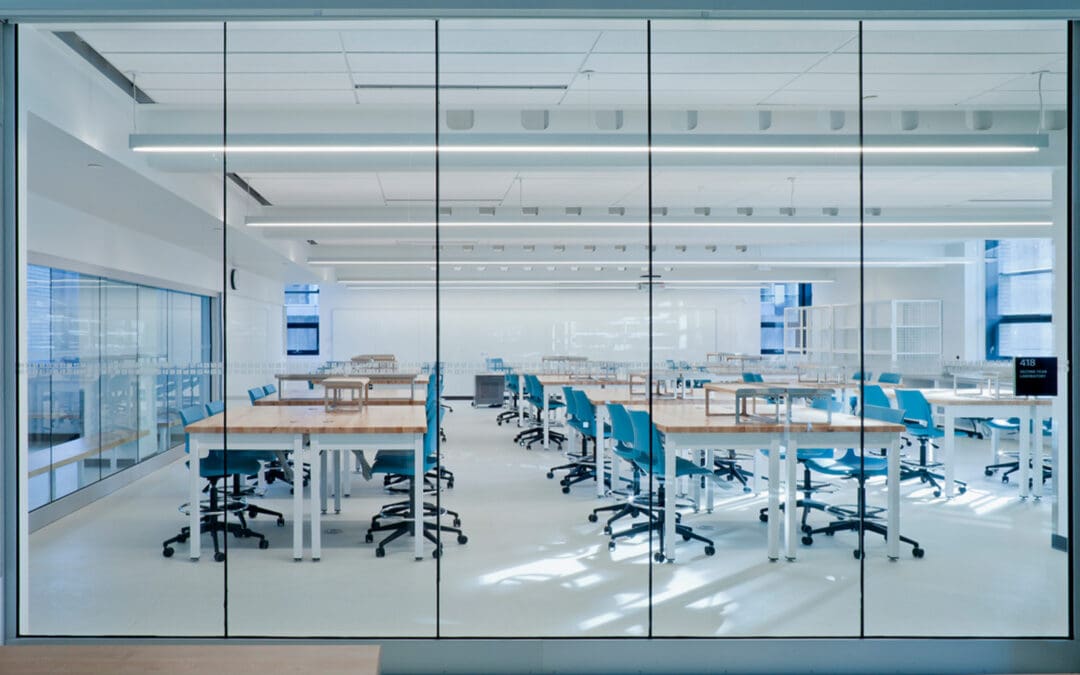
Ontario’s laboratory landscape is evolving rapidly. In 2026, labs are no longer being designed as static, purely functional spaces. Instead, they are becoming intelligent, adaptable, and highly sustainable environments built to support changing science, growing teams, and long-term performance.
With billions of dollars committed by the Ontario government toward health and science infrastructure, and private investment accelerating to address the ongoing wet lab shortage, the way laboratories are planned and built is fundamentally changing. Based on what we’re seeing across the province, four key trends are shaping the future of lab infrastructure in Ontario.
1. The Shift to Modular-First Lab Design
Traditional laboratory builds were often designed to last 20 years or more with minimal change. In 2026, that approach no longer makes sense. Ontario labs are moving toward agile, modular infrastructure that can evolve alongside research priorities.
What’s Changing
Modern lab projects are increasingly designed with modular casework systems and plug-and-play utility spines. These systems allow spaces to be reconfigured quickly, sometimes in days rather than months, so a chemistry lab can transition into genomics, diagnostics, or even AI-enabled robotics environments without major downtime.
Why It Matters in Ontario
In high-cost real estate markets like Toronto and the Greater Toronto Area, flexibility is critical. Modular lab infrastructure allows startups and growing organizations to scale within their existing footprint, avoiding costly and time-consuming rebuilds. For many Ontario-based research groups, modularity isn’t just a convenience; it’s a competitive advantage.
2. Decarbonization and the Rise of the “Green Premium”
Sustainability in laboratory design has moved beyond branding or corporate responsibility initiatives. In 2026, it’s a regulatory, financial, and operational requirement.
Smarter Ventilation Strategies
Historically, laboratories operated at 10–12 air changes per hour (ACH) around the clock. Today, many Ontario labs are adopting Demand Controlled Ventilation (DCV) systems that reduce airflow to 2–4 ACH when spaces are unoccupied. Because HVAC systems are the single largest energy consumer in a lab, this shift significantly lowers both energy use and carbon emissions.
Reducing Embodied Carbon
Ontario projects are also placing greater emphasis on embodied carbon – the emissions associated with construction materials themselves. Low-carbon concrete, greener steel, and responsibly sourced finishes are becoming standard considerations.
There is also a notable increase in adaptive reuse projects, particularly in cities like Hamilton, Kitchener, and parts of the GTA. Converting existing industrial buildings into life science facilities preserves the carbon investment of the original structure while accelerating development timelines.
3. The Integration of “Invisible” Smart Technology
We’ve entered the era of the frictionless smart lab, where technology is embedded into the infrastructure itself; often out of sight, but always at work.
IoT and Digital Twins
Sensors integrated into fume hoods, benches, and service spines now provide real-time data on airflow, energy consumption, and space utilization. Many new Ontario lab facilities are managed through Digital Twins, which are virtual models that help operators predict equipment failures, identify inefficiencies, and optimize space usage over time.
Automation-Ready Infrastructure
Lab infrastructure is also being designed with automation in mind. Mobile benches with docking stations for autonomous mobile robots (AMRs) are becoming more common, particularly in clinical and diagnostic labs across the GTA. These systems help address ongoing labour shortages by enabling automated sample transport and workflow support.
4. Human-Centric “Destination” Lab Design
In 2026, successful labs aren’t just technically advanced, they’re places people want to work.
Designing for People, Not Just Processes
Lab leaders across Ontario are recognizing that talent attraction and retention depend on the physical environment. Biophilic design elements such as increased daylight access, outdoor terraces, and visual connections to nature are making their way into laboratory planning.
Quiet zones for focused analytical work and thoughtfully designed break areas support mental clarity and reduce cognitive fatigue, an increasingly important consideration in high-performance research settings.
Collaboration Built Into the Layout
Modern labs are no longer isolated wet spaces. They are being designed with adjacent dry labs, computational zones, and collaborative hubs that reflect how science is actually done today – through a blend of bench work, data analysis, and team-based problem-solving.
What This Means for Lab Projects in Ontario
The future of lab infrastructure in Ontario is modular, sustainable, intelligent, and human-focused. Organizations that plan for adaptability and efficiency today are better positioned to respond to tomorrow’s scientific and operational demands.
As a Canadian-owned provider with local operations in Toronto and Surrey, Alliance Scientific supports these 2026 priorities through modular laboratory casework, energy-efficient fume hoods, and regionally based expertise. Local presence also helps clients navigate supply chain challenges while maintaining project timelines and quality standards.
Looking Ahead
Laboratories are no longer static assets; they are living systems that must adapt, perform, and inspire. The most successful lab environments in Ontario will be those designed with flexibility, sustainability, and people at their core.
If you’re planning a new lab or upgrading an existing space, understanding these trends isn’t just helpful. It’s essential.