
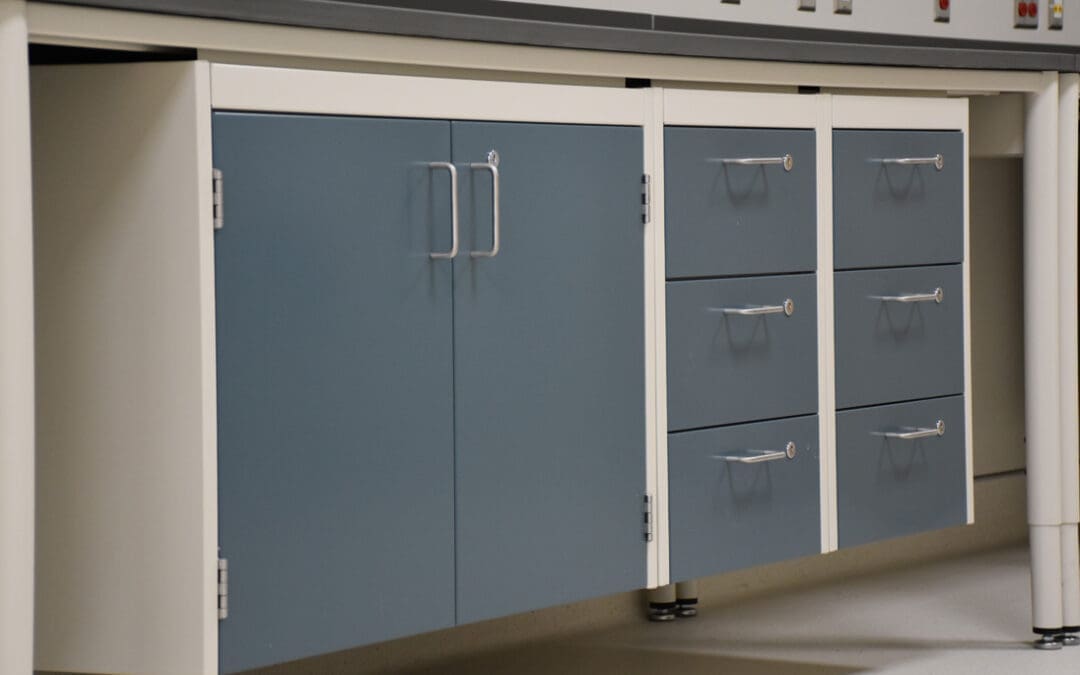
Selecting laboratory casework is one of the most important steps in planning a functional, efficient, and future-ready laboratory. Whether the project involves a university science building, healthcare facility, pharmaceutical lab, or industrial research space, the casework system you choose will directly influence workflow, safety, storage capacity, and long-term adaptability.
With so many laboratory casework solutions available, the decision is rarely about a single product. It is about aligning the entire casework system with how the facility will operate today and how it may need to evolve over time.
Start With How the Laboratory Will Function
Before reviewing products or specifications, it is essential to understand how the laboratory will actually be used.
Different facilities have very different operational demands. A teaching laboratory, for example, requires flexibility for changing class sizes and demonstrations. A research lab may prioritize equipment-heavy layouts and specialized work zones. A healthcare or diagnostic environment may require strict separation between clean and controlled areas.
Defining workflow early helps determine how laboratory casework should support movement, accessibility, storage, and equipment placement throughout the space.
When laboratory casework systems are selected without this step, inefficiencies often appear later in the form of restricted movement, inadequate storage, or limited usability.
Plan for Flexibility and Future Growth
Modern laboratories are no longer static environments. Research priorities shift, programs expand, and technologies evolve. As a result, flexibility has become a key factor in laboratory design.
A well-planned laboratory casework solution should allow for reconfiguration without requiring a complete redesign of the space. This includes considering how storage, benches, and support systems may need to be adjusted in the future.
Facilities that anticipate growth from the beginning are better positioned to avoid costly renovations and downtime later. In many cases, the most successful lab designs are those that can evolve alongside the organization they support.
Integrating Casework With Overall Laboratory Design
Laboratory casework does not operate in isolation. It is part of a larger ecosystem that includes ventilation systems, work surfaces, utilities, and equipment layout.
Coordinating casework with laboratory design ensures that service access, airflow, and workflow are properly supported. This is especially important in projects where multiple disciplines are working in the same space, such as engineering, chemistry, biology, or materials testing.
Early coordination between design teams and suppliers helps prevent conflicts during installation and ensures that the final laboratory operates as intended.
The Importance of Storage and Accessibility
Storage is often underestimated during the planning stage, but it plays a major role in day-to-day laboratory efficiency.
The right laboratory casework solution should provide appropriate storage for equipment, consumables, and sensitive materials without overcrowding the workspace. Accessibility is equally important, particularly in environments where multiple users share the same lab.
Well-designed casework improves organization, reduces time spent locating materials, and helps maintain safer, cleaner work environments.
Aligning Casework With Safety and Compliance Requirements
Every laboratory must meet specific safety and regulatory standards depending on its function and location. These requirements influence everything from cabinet configuration to ventilation integration and material selection.
Laboratory casework systems should support safe storage practices, proper labeling, and compatibility with required safety equipment. In regulated environments such as healthcare and pharmaceutical labs, compliance is not optional, and casework plays a direct role in maintaining those standards.
Choosing a System-Based Approach, Not Just Products
One of the most common challenges in laboratory planning is treating casework as a collection of individual products rather than a unified system.
A more effective approach is to view laboratory casework solutions as part of a coordinated infrastructure strategy. This includes base cabinets, wall storage, adaptable tables, and integrated service areas working together as a complete system.
When casework is designed as a system, laboratories benefit from improved workflow efficiency, better space utilization, and easier long-term modifications.
Working With Experienced Laboratory Planning Specialists
Choosing the right laboratory casework solution often requires input from specialists who understand both technical requirements and real-world laboratory operations.
Experienced partners can help identify potential design challenges early, recommend appropriate configurations, and ensure that the final installation aligns with project goals. This is especially valuable in large-scale projects where coordination between architects, engineers, and contractors is critical.
Final Thoughts
Selecting laboratory casework is not simply a product decision. It is a design decision that affects how a laboratory functions for years to come.
The most effective laboratory casework solutions are those that align with workflow, support future flexibility, integrate with broader laboratory systems, and meet the practical demands of daily use.
When these factors are considered early in the planning process, laboratories are better positioned to operate efficiently, adapt over time, and support the work being done within them.
Comparing systems? Our durable painted metal lab casework page sets out the core features, technical specifications and benefits for architects and specifiers.