
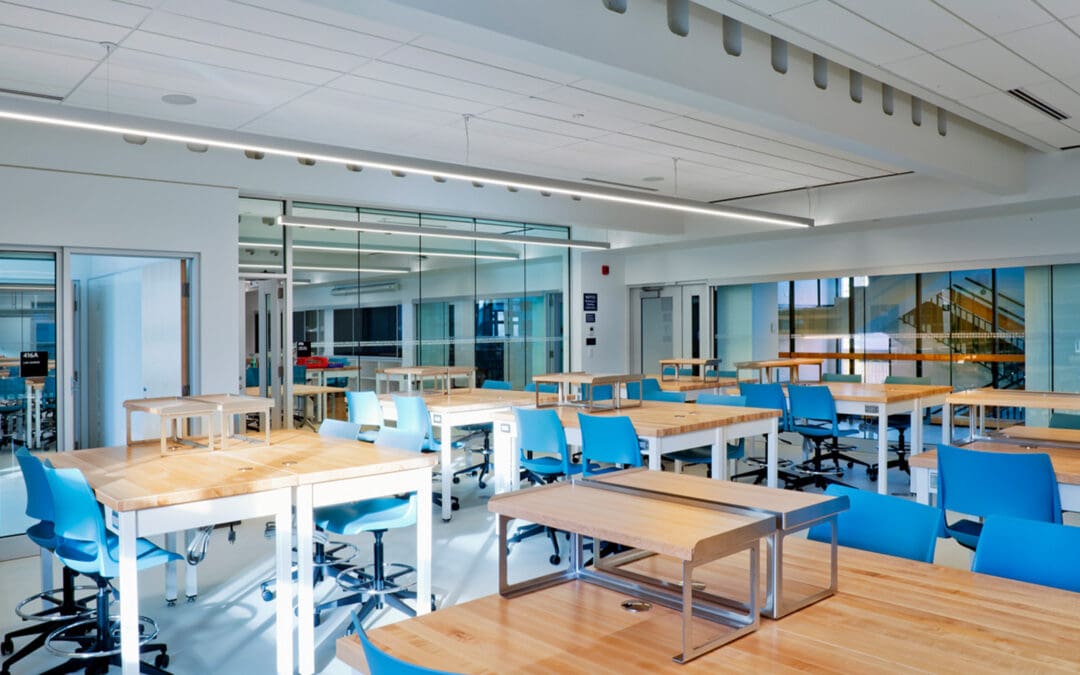
Laboratories are not static environments. Research programs change, equipment gets replaced, teams expand, and the way a space is used can evolve significantly over the life of a facility.
That is one reason modular laboratory design has become increasingly important in modern laboratory planning. Rather than creating a space that is optimized for one specific configuration, modular laboratories are designed with flexibility in mind, allowing furniture, casework, and workstations to be adapted as requirements change.
For research institutions, universities, healthcare facilities, pharmaceutical companies, and industrial laboratories, that flexibility can make a significant difference over the long term.
What Is Modular Laboratory Design?
A modular laboratory is designed around components that can be reconfigured, relocated, or replaced without requiring a complete renovation of the space.
This can include modular laboratory furniture, adaptable table systems, relocatable laboratory casework, flexible work surfaces, and service connections designed to accommodate changes in layout.
The objective is not simply to make furniture movable. Effective modular laboratory design considers the entire workspace and how its components can work together as the laboratory evolves.
Why Flexibility Matters in a Laboratory
A laboratory that works perfectly today may not meet the same requirements five or ten years from now.
New equipment may require different clearances or utility connections. Research teams may grow or reorganize. A university may introduce new programs that require different teaching configurations. A pharmaceutical or biotechnology facility may change its processes as projects progress.
Traditional fixed layouts can make these changes expensive and disruptive.
Adaptable laboratory furniture provides another option. When workstations and storage systems can be moved or reconfigured, facilities can make changes without completely rebuilding the laboratory around every new requirement.
Modular Furniture Can Support Changing Workflows
Laboratory workflow is closely connected to the physical layout of the space.
Workstations, storage, equipment, utilities, and circulation paths all need to be positioned appropriately for the work being performed. When a laboratory’s workflow changes, the furniture layout may need to change with it.
Adaptable table systems can make this process significantly easier. Systems such as Alliance Scientific’s modular table solutions can be configured for different laboratory arrangements and can incorporate services such as electrical, plumbing, and data connections.
This allows laboratory teams to adjust their workspace while maintaining a coordinated approach to infrastructure.
Laboratory Casework Can Be Designed for Adaptability
Modularity is not limited to laboratory tables.
Modern laboratory casework can also be designed with relocation and reconfiguration in mind. Interchangeable components, adaptable storage configurations, and cabinetry designed for relocation can help laboratories respond to changing storage requirements without replacing the entire system.
This is particularly valuable in research and educational environments where the equipment and materials being stored can change frequently.
Selecting laboratory casework with future flexibility in mind can help facilities avoid unnecessary disruption when the space eventually needs to be modified.
Modular Design Can Help Extend the Life of a Laboratory
Laboratory renovations can be complex. They may involve construction, electrical and plumbing work, ventilation systems, equipment relocation, and significant downtime.
A modular approach can reduce the need for major alterations when relatively simple changes are required.
For example, instead of completely rebuilding a laboratory because a workstation configuration no longer suits the research being performed, adaptable furniture may allow the existing space to be reorganized.
This does not eliminate the need for renovations when major infrastructure changes are required, but it can give facilities considerably more flexibility between major capital projects.
Modularity and Laboratory Utilities
One of the most important considerations when designing a modular laboratory is how utilities will connect to the furniture.
Electrical, plumbing, data, and other services need to be accessible and coordinated with the furniture configuration. Systems designed with flexible service connections can make relocation and reconfiguration much more practical.
Ceiling service panels and overhead service carriers can also support adaptable laboratory layouts by providing convenient connection points for laboratory services.
Planning these systems together with the furniture from the beginning is essential. A table may be technically movable, but it is only truly adaptable if the surrounding infrastructure can accommodate that movement.
Where Modular Laboratories Make the Most Sense
Modular laboratory design can be particularly valuable in environments where change is expected.
Research laboratories often benefit because research programs and equipment can evolve quickly. Universities and colleges can use adaptable spaces to accommodate different courses, class sizes, and teaching configurations. Pharmaceutical and biotechnology facilities may also benefit when laboratory processes change as projects move through different stages.
Even facilities with relatively stable workflows can benefit from modularity because equipment eventually reaches the end of its useful life and laboratory spaces often need to accommodate new technology.
Choosing the Right Modular Laboratory Solution
Not every laboratory requires the same level of flexibility. The right approach depends on the facility, the work being performed, the available infrastructure, and the likelihood of future changes.
During the planning stage, project teams should consider how equipment may change, whether workstations may need to move, how utilities will be accessed, and whether the laboratory could eventually require additional capacity.
Working with an experienced laboratory design and planning partner can help identify opportunities for flexibility without adding unnecessary complexity to the project.
Building Laboratories That Can Adapt
The strongest modular laboratory designs are not simply spaces filled with movable furniture. They are carefully planned environments where casework, workstations, utilities, equipment, and workflow have been considered together.
Alliance Scientific provides adaptable laboratory furniture systems, laboratory casework, work surfaces, chemical fume hoods, and laboratory planning support for projects across Canada. With more than 50 years of experience in laboratory construction, the team works with architects, consultants, contractors, and laboratory owners to develop solutions that can support both current requirements and future changes.