
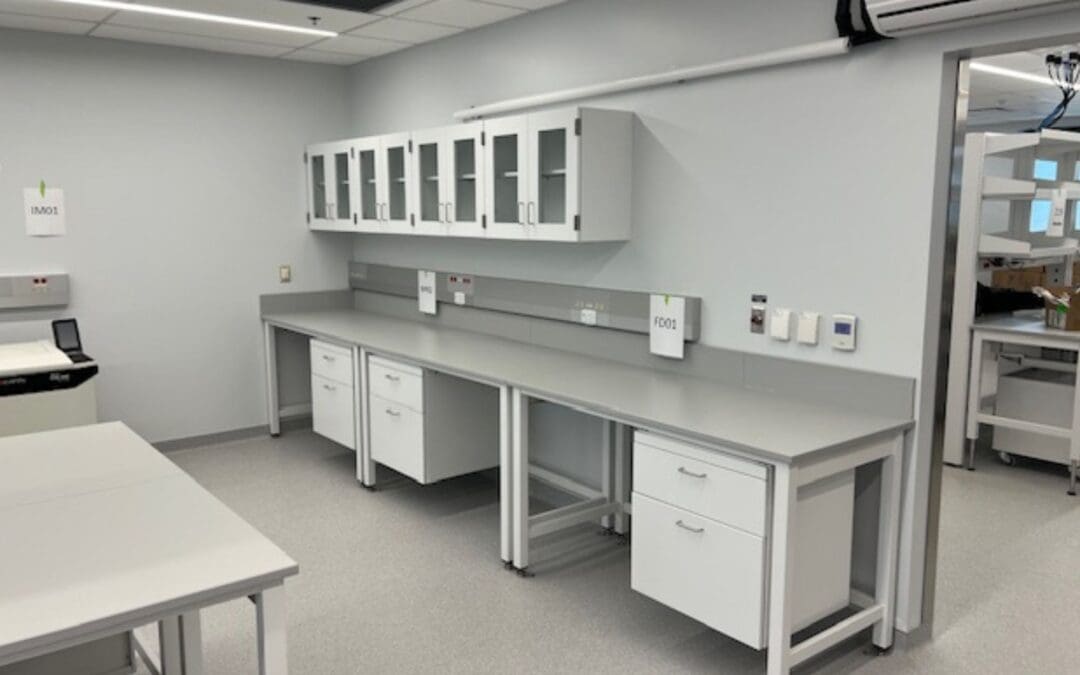
Choosing a laboratory furniture supplier is an important decision during any laboratory construction or renovation project. Laboratory casework, work surfaces, adaptable furniture, and fume hoods are long-term investments, and the supplier you choose can have a significant impact on the performance, functionality, and overall success of the finished space.
Price is certainly a consideration, but it should not be the only one. A supplier that can support the project through planning, product selection, coordination, and installation can help reduce complications and create a laboratory that performs well long after construction is complete.
Before selecting a laboratory furniture supplier, here are some important questions to ask:
Does the Supplier Understand Laboratory Design?
Laboratory furniture is not simply commercial cabinetry adapted for a scientific environment. Materials, finishes, hardware, ventilation, utilities, ergonomics, and workflow all need to be considered together.
Ask whether the supplier has experience working on laboratory projects similar to yours. A supplier with established laboratory expertise should be able to discuss the specific requirements of research laboratories, teaching laboratories, healthcare facilities, pharmaceutical environments, industrial laboratories, and other specialized spaces.
Experience matters because the right laboratory furniture solution depends heavily on how the facility will actually be used.
Can They Help With Laboratory Planning and Design?
A strong laboratory furniture supplier should be able to contribute more than product catalogues.
Ask whether they provide design support and can work directly with architects, consultants, planners, and construction managers. Early collaboration can help identify potential issues with layouts, equipment placement, utilities, workflow, and future flexibility before they become expensive changes during construction.
For larger projects, having access to planning and design expertise through the same supplier can also simplify communication between different project stakeholders.
Do They Offer the Right Range of Laboratory Furniture?
Every laboratory has different requirements, so a supplier should offer enough flexibility to create a solution that fits the application rather than forcing the project into a predetermined system.
Depending on the facility, this may include laboratory casework, adaptable table systems, chemical fume hoods, laboratory work surfaces, sinks, storage, and specialized equipment.
A broad product offering also makes it easier to coordinate different components into a cohesive laboratory design.
What Materials and Finishes Are Available?
Laboratory furniture materials should be selected according to the environment in which they will be used.
Metal and wood laboratory casework can provide excellent performance when manufactured with appropriate laboratory-grade construction and protective finishes. Phenolic and stainless steel solutions may be better suited to areas requiring enhanced moisture resistance, hygiene, or more demanding cleaning protocols.
Work surfaces also require careful consideration. Phenolic resin, epoxy resin, stainless steel, and other materials each have different performance characteristics.
A knowledgeable supplier should be able to explain these differences and help determine which materials are appropriate for each area of the laboratory.
Are the Products Tested to Recognized Standards?
Ask what standards the supplier’s laboratory furniture is designed or tested to meet.
SEFA standards, for example, establish recommended practices and performance criteria for laboratory casework and adaptable laboratory furniture. Understanding how products perform under testing for factors such as load capacity, finish durability, impact, and chemical resistance can provide greater confidence in a long-term investment.
The supplier should be able to provide clear technical information rather than relying solely on general claims about durability or quality.
Can the Furniture Adapt as the Laboratory Changes?
Laboratories rarely remain exactly the same over their entire lifespan. Research priorities change, equipment is replaced, programs expand, and workflows evolve.
Ask whether the laboratory furniture can be relocated, reconfigured, or modified as requirements change. Adaptable laboratory furniture and casework systems can provide valuable flexibility, particularly in research and educational environments where future requirements may be difficult to predict.
Planning for change at the beginning of a project can help extend the useful life of the laboratory.
Does the Supplier Provide Installation Support?
Installation is an important part of laboratory furniture performance.
Ask who will install the furniture and whether the supplier works with qualified, experienced laboratory installers. Proper installation helps ensure that casework, work surfaces, utilities, and other components are coordinated correctly and function as intended.
A supplier involved early in the project can also help installation teams anticipate logistical requirements before the work begins.
Can They Support the Project From Planning Through Installation?
Perhaps the most important question is whether the supplier can remain involved throughout the project rather than simply supplying individual products.
A laboratory furniture supplier with design support, product expertise, project coordination, and installation capabilities can provide a more integrated approach to laboratory construction and renovation.
This is particularly valuable for larger projects where multiple trades, consultants, equipment suppliers, and project managers need to coordinate their work.
Choosing a Laboratory Furniture Supplier
The right laboratory furniture supplier should bring more to a project than products alone. Look for a partner with demonstrated laboratory expertise, a comprehensive product offering, design and planning capabilities, knowledge of laboratory standards, and experienced installation support.
Alliance Scientific brings more than 50 years of experience in laboratory construction and works with architects, consultants, contractors, and laboratory owners across Canada. Its integrated approach combines laboratory planning and design support with laboratory casework, adaptable furniture, chemical fume hoods, work surfaces, and installation services.
For project teams planning a new laboratory or renovating an existing facility, choosing a supplier that can participate throughout the process can help create a space that is functional, durable, and prepared for the demands of modern scientific work.