
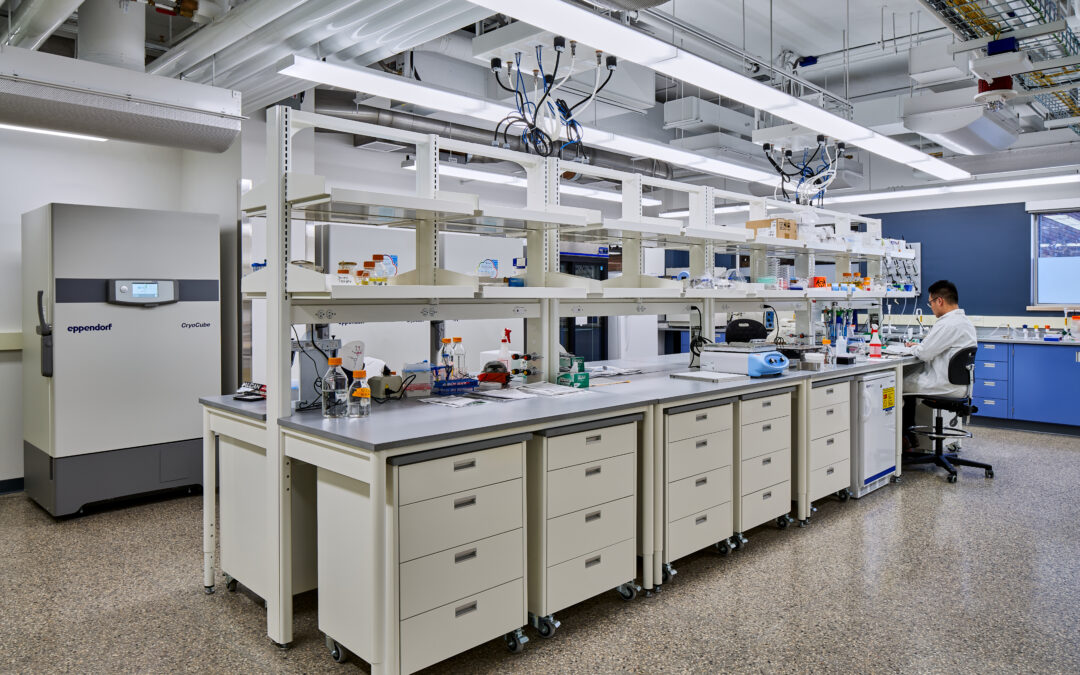
Choosing laboratory equipment is rarely as simple as finding a product that meets a specification and placing an order. For a new laboratory, renovation, or expansion, equipment has to work within the larger design of the space, including casework, utilities, ventilation, workflow, installation requirements, and future needs.
That makes the laboratory equipment supplier an important part of the project.
A supplier with experience in laboratory environments can help project teams make informed decisions about equipment selection, coordination, installation, and long-term functionality. For architects, contractors, facility managers, researchers, and institutional teams, knowing what to look for in a supplier can make the planning process considerably easier.
Does the Supplier Understand Laboratory Environments?
Laboratory equipment operates in environments with very different requirements than a typical commercial space. Equipment may need to accommodate chemical exposure, specialized ventilation, plumbing, electrical connections, temperature requirements, sanitation protocols, or precise workflow considerations.
A good laboratory equipment supplier should understand these conditions and be able to discuss how equipment fits into the overall laboratory design.
Alliance Scientific works with universities, colleges, research facilities, healthcare organizations, industry, and schools across Canada. Its product offering includes laboratory equipment alongside laboratory casework, adaptable table systems, chemical fume hoods, special-use ventilation, and laboratory work surfaces and fixtures.
This broader understanding is valuable because equipment rarely exists in isolation.
Can They Help With Equipment Planning?
Equipment planning should happen early in a laboratory project, rather than after the room layout has already been finalized.
The size, weight, utility requirements, service clearances, and location of laboratory equipment can all affect the design of the space. Planning these details early can help prevent conflicts during construction and make installation more efficient.
A supplier that offers equipment planning support can help project teams coordinate these requirements before they become problems.
For larger laboratory projects, this can include reviewing equipment requirements, coordinating with architectural and engineering teams, and helping determine how equipment should be incorporated into the laboratory layout.
Do They Offer More Than Individual Products?
A laboratory equipment supplier does not necessarily need to manufacture every product themselves. What matters is whether they can provide access to appropriate equipment and coordinate it with the rest of the laboratory.
Alliance Scientific is a full-service provider of laboratory casework systems, fume hoods, and laboratory equipment, allowing project teams to coordinate several elements through one experienced supplier.
Its product offering includes conventional, flexible, and adaptable laboratory casework systems, along with equipment designed for a range of scientific environments.
This integrated approach can simplify communication during a project, particularly when equipment needs to coordinate with laboratory furniture, ventilation, utilities, and work surfaces.
Can They Support Architects, Contractors, and Designers?
Laboratory projects typically involve multiple stakeholders. Architects, laboratory planners, engineers, contractors, facility managers, and end users may all have different requirements that need to be coordinated.
An experienced laboratory supplier should be comfortable working within this project environment.
Services such as design support, BIM coordination, engineering solutions, and installation services can help connect product selection with the broader project. Early collaboration can also help identify practical issues before equipment arrives on site.
For complex laboratory projects, that level of coordination can be just as valuable as the equipment itself.
Do They Have Installation Experience?
Even the right equipment can create problems if installation is not properly planned.
Laboratory equipment may require specific utility connections, positioning, clearances, anchoring, ventilation, or coordination with surrounding casework. Installation should therefore be considered during the specification and planning stages, not treated as an afterthought.
A supplier with established installation services can help coordinate the transition from product selection to a functioning laboratory.
Alliance Scientific works with qualified installation teams and provides installation support as part of its broader laboratory solutions.
Can They Support Different Types of Laboratory Projects?
The needs of a research laboratory can be very different from those of a university teaching laboratory, clinical facility, or industrial testing environment.
A supplier with experience across multiple sectors is better positioned to understand those differences and recommend equipment based on the actual application.
Alliance Scientific serves universities and colleges, research facilities, healthcare organizations, industry, and schools, with regional offices supporting projects across Eastern and Western Canada.
That experience also gives project teams access to a broader range of laboratory solutions when requirements change during the planning process.
Do They Have the Right Product Partnerships?
A strong supplier should have established relationships with reputable laboratory equipment and furniture manufacturers.
These partnerships can give project teams access to specialized products while allowing the supplier to provide guidance on selection and integration.
Alliance Scientific works with premium distribution partners including Hawkins Laboratory Fume Hoods and Bedcolab, supporting its broader offering of laboratory casework, adaptable furniture, chemical fume hoods, ventilation, work surfaces, and equipment.
For larger projects, access to multiple product categories can make it easier to develop a cohesive laboratory rather than sourcing every component independently.
Looking Beyond the Equipment
The right laboratory equipment supplier should bring more to a project than a product catalogue.
Technical knowledge, equipment planning, design coordination, engineering support, installation experience, and familiarity with different laboratory environments all contribute to a more successful project.
For project teams planning a new laboratory or renovating an existing facility, choosing a supplier that can participate throughout the process can help reduce coordination challenges and create a more functional end result.
Alliance Scientific provides laboratory equipment alongside casework, fume hoods, adaptable table systems, work surfaces, ventilation, planning, engineering, BIM, and installation services. With regional operations serving Eastern and Western Canada, the company supports laboratory projects across education, research, healthcare, industry, and other specialized environments.
When evaluating a laboratory equipment supplier, the most useful question may not be simply “What equipment do you sell?” It is “How can you help us plan, coordinate, and deliver the laboratory as a whole?”
That distinction can have a significant impact on the success of the project.