
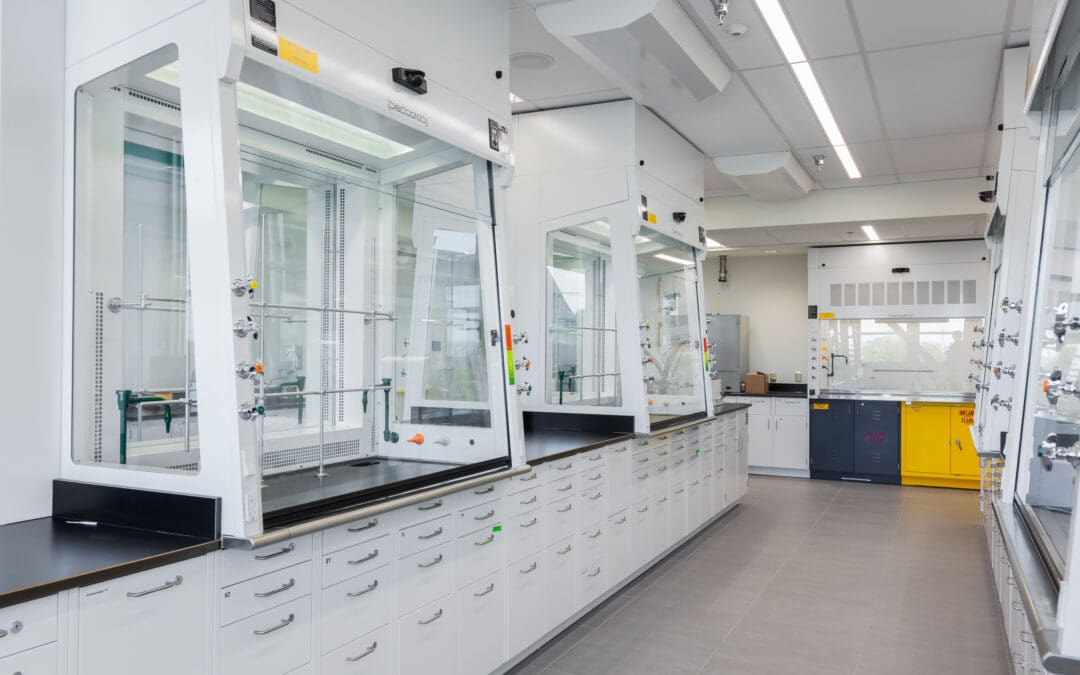
Selecting the right ventilation strategy is a key part of laboratory design, especially when it comes to chemical fume hoods and overall laboratory HVAC performance. One of the most common decisions project teams face is whether to use Constant Air Volume (CAV) or Variable Air Volume (VAV) systems. Both approaches are widely used in modern laboratory environments, but they operate differently and serve different project needs.
Understanding how each system works can help architects, engineers, and facility planners make informed decisions that support safety, efficiency, and long-term performance.
What Is a Constant Air Volume (CAV) Fume Hood?
A Constant Air Volume (CAV) fume hood operates by maintaining a steady, continuous airflow regardless of sash position. The volume of air exhausted from the hood remains constant at all times, even when the sash is partially closed.
This type of system is straightforward in design and operation. Because airflow does not change, CAV systems are often easier to commission and manage from a mechanical standpoint.
CAV fume hoods are commonly used in facilities where simplicity and consistent ventilation are prioritized. They are often found in teaching laboratories, smaller research spaces, and retrofit projects where existing HVAC systems are already configured for constant airflow.
What Is a Variable Air Volume (VAV) Fume Hood?
A Variable Air Volume (VAV) fume hood adjusts the amount of air being exhausted based on the position of the sash. When the sash is lowered, airflow is reduced. When the sash is raised, airflow increases to maintain safe containment.
This dynamic adjustment allows the system to respond to real-time usage conditions, making it significantly more energy efficient in most modern laboratory environments.
VAV systems are widely used in new laboratory construction, particularly in research, pharmaceutical, and institutional facilities where energy performance and operational efficiency are key design priorities.
Key Differences Between CAV and VAV Systems
The primary difference between CAV and VAV systems is how airflow is managed during operation.
CAV systems maintain a constant exhaust rate, which simplifies design and ensures predictable ventilation. However, this can result in higher energy consumption because full airflow is maintained even when the hood is not in active use.
VAV systems, on the other hand, adjust airflow based on usage. This can significantly reduce energy demand, especially in laboratories where fume hood sashes are frequently closed or partially closed during normal operation.
From a cost perspective, CAV systems often have lower upfront complexity, while VAV systems typically deliver long-term operational savings through reduced energy consumption.
How to Choose Between CAV and VAV in a Laboratory
Choosing between CAV and VAV depends on the specific requirements of the laboratory project.
CAV systems may be appropriate for smaller facilities, teaching environments, or projects with limited HVAC flexibility. They are also sometimes used in renovation projects where existing infrastructure is designed around constant airflow.
VAV systems are generally preferred in modern laboratory design due to their energy efficiency and adaptability. They are well suited for research facilities, healthcare environments, and large-scale institutional projects where multiple fume hoods operate simultaneously.
Other important factors include budget, HVAC infrastructure, safety requirements, and how frequently the fume hoods will be actively used.
Integration With Laboratory Design
CAV and VAV systems should never be selected in isolation. They must be coordinated with overall laboratory design, including chemical fume hoods, laboratory casework solutions, and mechanical systems.
Proper planning ensures that airflow, safety performance, and workspace functionality are all aligned. When these systems are designed together from the beginning, laboratories benefit from improved efficiency, reduced retrofit costs, and better long-term performance.
This is especially important in complex projects where ventilation strategy directly impacts energy use, safety compliance, and operational flexibility.
Final Thoughts
There is no universal answer when it comes to Constant Air Volume (CAV) vs Variable Air Volume (VAV) systems. Each approach offers distinct advantages depending on the laboratory environment and project goals.
CAV systems provide simplicity and predictable airflow, while VAV systems offer energy efficiency and modern adaptability. The right choice depends on how the laboratory will be used, the available infrastructure, and long-term operational priorities.